

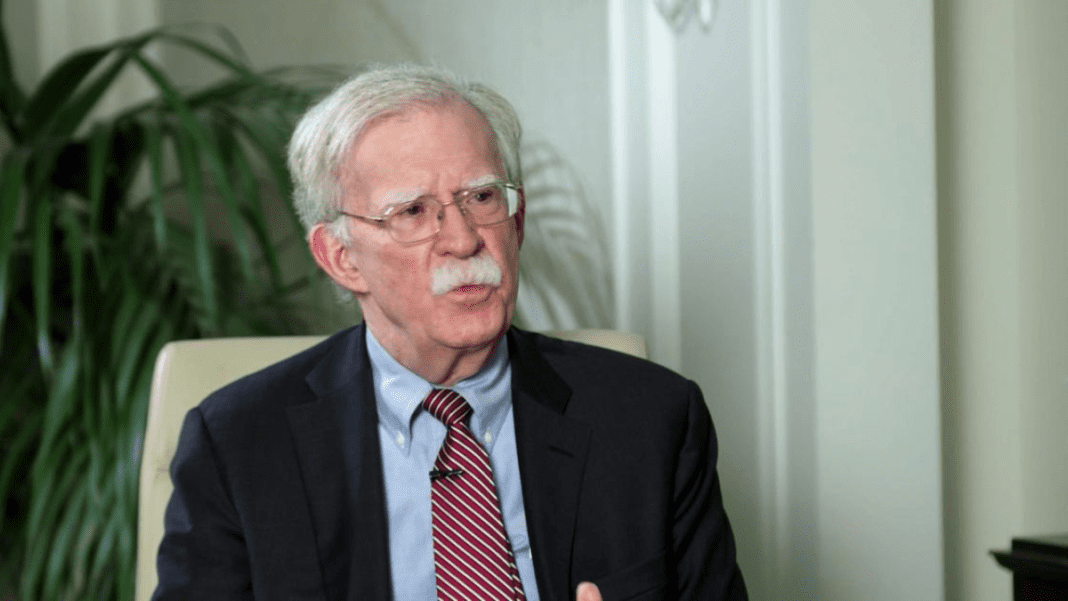
FBI cites foreign hack of Bolton AOL account as reason to search home for classified records

FBI Links Bolton AOL Hack to Classified Records Probe

Federal investigators searched the Maryland home of John Bolton, the former national security adviser, after learning about a past hack of his AOL email account. A newly released affidavit shows that a foreign adversary once broke into Bolton’s email, raising fears that sensitive information might have been exposed.

Bolton served as national security adviser during the administration of Donald Trump. He is also known as a longtime foreign policy specialist. The search of his home last month was based partly on intelligence that linked the old hack to concerns about classified records.

The affidavit explains that a section labeled “Hack of Bolton AOL Account by Foreign Entity” was a major reason for the search. The full details of the hack are blacked out in the document, but officials said the emails had signs of being intercepted.

Reporters were told by sources that the CIA saw hallmarks of China, Russia, or Iran in the hack. They considered Iran the most likely suspect. The CIA had collected intelligence on the hack overseas years earlier and later shared it with federal investigators.

The FBI believed that the intercepted emails raised concerns that Bolton may have mishandled national defense information after leaving the White House in 2019. A review of the White House computer systems during that period also triggered red flags about Bolton’s communications.

Records, Book Dispute, and Search Details

The affidavit also describes Bolton’s interactions with Ellen Knight, a government records specialist. Knight was responsible for reviewing Bolton’s book manuscript in 2020 before publication. According to the affidavit, she told Bolton to make changes to remove sections that contained classified details. Notes from their February 2020 meeting showed that Bolton appeared to agree that certain passages had to be altered.

Even after revisions, the Trump administration argued that Bolton’s book should not be published. Officials claimed it still contained sensitive details and that Bolton had not received full clearance. Despite the opposition, the book was released in the summer of 2020 after a legal battle. A judge refused to block sales, but the new affidavit provides more detail on Knight’s direct exchanges with Bolton during the review.

Stansbury accuses Trump and GOP of blocking full Epstein file release in Congress

During the FBI’s August search, agents seized documents, phones, computers, and hard drives from Bolton’s Maryland home. Some of the seized files were connected to military “allied strikes.” Agents also searched Bolton’s downtown Washington, D.C. office. Several media outlets have since filed legal motions asking the court to release the records from those searches.

Bolton’s attorney, Abbe Lowell, strongly defended his client. He said that investigators found nothing improper in the search. Lowell explained that the materials seized were ordinary records from Bolton’s decades of service, including time as U.S. ambassador to the United Nations, assistant attorney general, and national security adviser. He added that the documents included items already cleared during the book’s pre-publication review.

Public Comments and Legal Battles

The affidavit also highlights Bolton’s past public remarks. Investigators noted that Bolton had often criticized other politicians, such as Hillary Clinton, for their handling of classified information. He made comments on television and in interviews stressing the importance of protecting sensitive material. The FBI said these remarks showed that Bolton was fully aware of the rules around classified records.

Reports say Trump tried to reach Modi four times but White House disputes claim

The intelligence collected about the AOL hack was provided to the FBI under the direction of then-CIA Director John Ratcliffe, who granted limited access to FBI Director Kash Patel. This intelligence became a central part of the case and gave investigators grounds to request a search warrant.

So far, Bolton has not been charged with any crime. But the newly unsealed documents explain why federal investigators believed there was reason to search his home and office. They also show how an old foreign hack of his AOL account has become linked to one of the most significant searches involving a former senior U.S. official.

Renuka Bangale
Renuka Bangale
Renuka is a distinguished Chartered Accountant and a Certified Digital Threats Analyst from Riskpro, renowned for her expertise in cybersecurity. With a deep understanding of cybercrimes, malware, cyber warfare, and espionage, she has established herself as an authority in the field. Renuka combines her financial acumen with advanced knowledge of digital threats to provide unparalleled insights into the evolving landscape of information security. Her analytical prowess enables her to dissect complex cyber incidents, offering clarity on risks and mitigation strategies. As a key contributor to Newsinterpretation’s information security category, Renuka delivers authoritative articles that educate and inform readers about emerging threats and best practices.

TOP 10 TRENDING ON NEWSINTERPRETATION

Cyber Attacks on Space Infrastructure: Satellites, GPS and the Ground Systems Behind Them

From the Viasat KA-SAT hack to GPS jamming over the Baltic, a research guide to how attackers target satellites, navigation signals and ground stations, and why it matters on Earth.

How AI Agents Are Used in Cyber Attacks: From Assisted Hacking to AI-Orchestrated Espionage

Attackers now use AI agents to scan networks, write exploits and run extortion campaigns. A research guide to documented cases, including the first reported AI-orchestrated espionage campaign, and what defenders should do.

Cyber Attacks on AI and LLMs: How Attackers Target Large Language Models

Prompt injection, data poisoning, model theft and jailbreaks: a research guide to how attackers target AI systems and large language models, with real cases and defences.

French Supermarket Refrigeration Cyberattack: How Hacking the Cold Chain Can Endanger Lives

In October 2026 attackers heated refrigeration cabinets in hundreds of French supermarkets to as much as 50°C. No one was hurt, but the attack shows how hacking the cold chain can endanger lives through fire, food poisoning and spoiled medicines.

Cyberattacks on Nuclear Facilities: Stuxnet, Kudankulam and the Limits of Air Gaps

Stuxnet, the Davis-Besse worm and malware at India’s Kudankulam plant: what they show about cyber risk at nuclear facilities and the limits of air gaps.

Triton: When Hackers Target the Safety Systems That Prevent Industrial Disasters

The 2017 Triton attack targeted the safety systems that prevent industrial disasters. What happened, who was charged, and how plants protect their last line of defence.

Cybersecurity Risks in Smart Cities: When Connected Infrastructure Fails

How connecting traffic control, emergency alerts and utilities concentrates cyber risk in cities, what the Dallas and Atlanta incidents showed, and what governments recommend.

Weaponized Drones: Hijacking, GPS Spoofing and Emerging Cyber Warfare Risks

How drones can be hijacked, jammed or misled by GPS spoofing, what researchers have demonstrated, and why governments treat drone fleets as a security risk.

Ransomware Attacks on Hospitals: How Healthcare Cyberattacks Put Patients at Risk

How ransomware against hospitals and their suppliers delays care and endangers patients, what the Düsseldorf and WannaCry cases show, and what research says about deaths.

Operational blunder exposes massive Russian cyber espionage attack on Ukrainian prosecutors

A major cyberattack has compromised the email accounts of...

Cyber Attacks on Space Infrastructure: Satellites, GPS and the Ground Systems Behind Them

From the Viasat KA-SAT hack to GPS jamming over the Baltic, a research guide to how attackers target satellites, navigation signals and ground stations, and why it matters on Earth.

French Supermarket Refrigeration Cyberattack: How Hacking the Cold Chain Can Endanger Lives

In October 2026 attackers heated refrigeration cabinets in hundreds of French supermarkets to as much as 50°C. No one was hurt, but the attack shows how hacking the cold chain can endanger lives through fire, food poisoning and spoiled medicines.

Cyberattacks on Nuclear Facilities: Stuxnet, Kudankulam and the Limits of Air Gaps

Stuxnet, the Davis-Besse worm and malware at India’s Kudankulam plant: what they show about cyber risk at nuclear facilities and the limits of air gaps.

Triton: When Hackers Target the Safety Systems That Prevent Industrial Disasters

The 2017 Triton attack targeted the safety systems that prevent industrial disasters. What happened, who was charged, and how plants protect their last line of defence.

Cybersecurity Risks in Smart Cities: When Connected Infrastructure Fails

How connecting traffic control, emergency alerts and utilities concentrates cyber risk in cities, what the Dallas and Atlanta incidents showed, and what governments recommend.

Ransomware Attacks on Hospitals: How Healthcare Cyberattacks Put Patients at Risk

How ransomware against hospitals and their suppliers delays care and endangers patients, what the Düsseldorf and WannaCry cases show, and what research says about deaths.

FBI warns of AVrecon malware targeting outdated routers linked to proxy based cybercrime

A serious cybersecurity warning has been issued regarding commonly...

Related Articles

Popular Categories
