

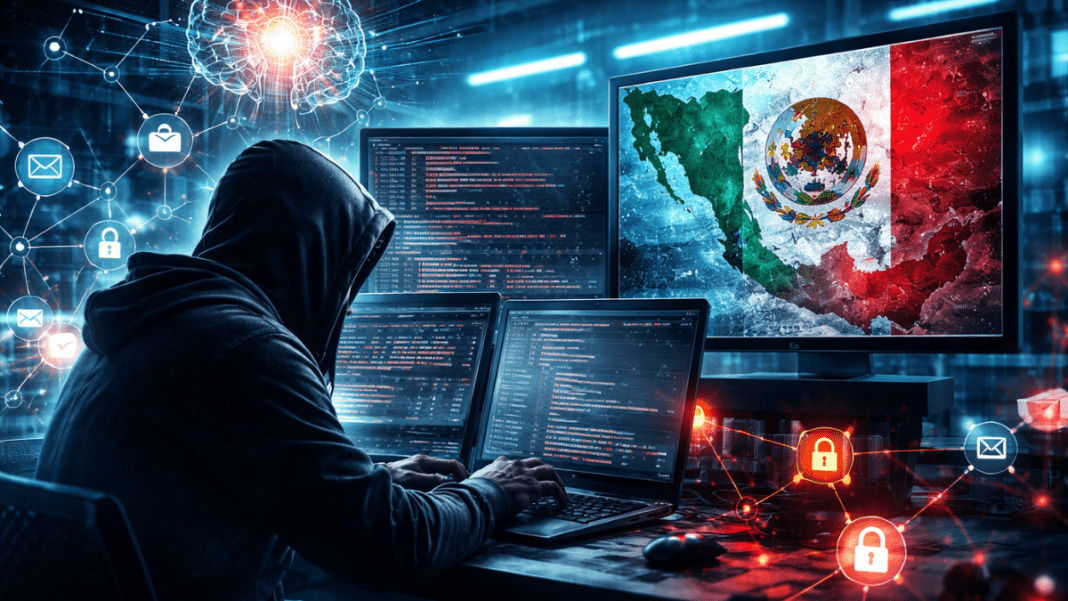

A major cybersecurity incident has drawn global attention after reports claimed that hackers used advanced artificial intelligence tools to penetrate the Mexican government’s digital systems. The breach reportedly resulted in the theft of around 150 GB of highly sensitive national data, including taxpayer records, voter information, and official access credentials.
The case has sparked widespread discussion because the attack allegedly involved Claude AI, developed by Anthropic, a powerful language model designed for writing, coding, and problem solving. While such tools are built for productivity and innovation, security analysts say the event shows how advanced technology like Claude AI can be misused when it falls into the wrong hands.
Sensitive Government Records Reportedly Exposed
According to initial findings, the stolen data includes personal information belonging to millions of citizens. This may involve identification details, financial records, and authentication credentials used by government departments.
Anthropic says DeepSeek Moonshot and MiniMax ran coordinated distillation campaigns on Claude AI
Authorities within the Mexican government moved quickly to investigate the breach after unusual activity was detected in internal networks. Emergency security procedures were activated, including system isolation, password resets, and expanded monitoring of digital infrastructure.
Experts say the size of the leak makes the incident particularly serious. Large data exposures increase the risk of identity theft, financial fraud, and targeted scams. Because voter and taxpayer databases are often used for verification, compromised records could be exploited in multiple ways.
Officials issued public advisories urging citizens to stay alert for suspicious emails, calls, or messages requesting personal information. Such warnings are common following large data leaks, as attackers may attempt to use stolen details to create convincing phishing campaigns.
Cybersecurity teams are continuing to analyze which departments were affected and how long the attackers remained inside the systems before the breach was detected.
Role of Claude AI and Concerns Over Dual-Use Technology
Investigators believe the attackers may have used Claude AI from Anthropic to assist with technical aspects of the intrusion. Reports suggest the AI’s coding capabilities could have helped generate scripts, identify system weaknesses, and automate repetitive tasks during the attack.
Large language models like Claude AI are designed to help developers write code, debug software, and solve complex problems. However, specialists often describe these systems as dual-use technology because the same capabilities can be repurposed for harmful activities.
Security analysts suspect the attackers may have used AI to perform automated vulnerability scanning. This process involves searching for weak points in software or network configurations that can be exploited to gain entry.
There are also indications that AI-driven social engineering may have been used. Social engineering focuses on manipulating people rather than systems, often through realistic emails or messages. AI can produce convincing communication quickly, increasing the chances that someone might unknowingly provide access.
Another concern raised by experts involves privilege escalation. This occurs when attackers gain higher levels of permission after entering a system, allowing them to move across databases and extract larger amounts of information.
The incident is being closely studied across the cybersecurity community because it demonstrates how automation supported by tools such as Claude AI can speed up attacks and reduce the technical barriers that previously limited large-scale intrusions.
Immediate Response and Ongoing Investigation
Following the discovery of the breach, the Mexican government began containment efforts to limit further exposure. Affected systems were taken offline, credentials were rotated, and additional monitoring tools were deployed to track suspicious activity.
Digital forensic teams are reviewing network logs, authentication records, and data transfer patterns to determine the sequence of events. Investigators are working to confirm exactly how the attackers gained initial access and which datasets were removed.
The situation has also led to increased scrutiny of AI safety guardrails. Technology companies, including Anthropic, have faced renewed attention regarding how their models are monitored for misuse and how abnormal activity is detected.
A1 hallucinations hit U.S. courts as judges impose sanctions over fake citations
Security professionals are examining whether traditional cybersecurity defenses are equipped to handle AI-assisted attacks. Automated tools can test multiple entry points quickly, making it more difficult for human teams to identify threats in real time.
Authorities continue to warn citizens about possible identity theft risks following the exposure of credentials. Individuals have been encouraged to review financial activity, update passwords, and remain cautious of communications claiming to come from official sources.
As technical assessments continue, the breach remains a significant case study in the intersection of artificial intelligence and national digital security, with analysts focusing on the methods used and the scale of the data involved.