

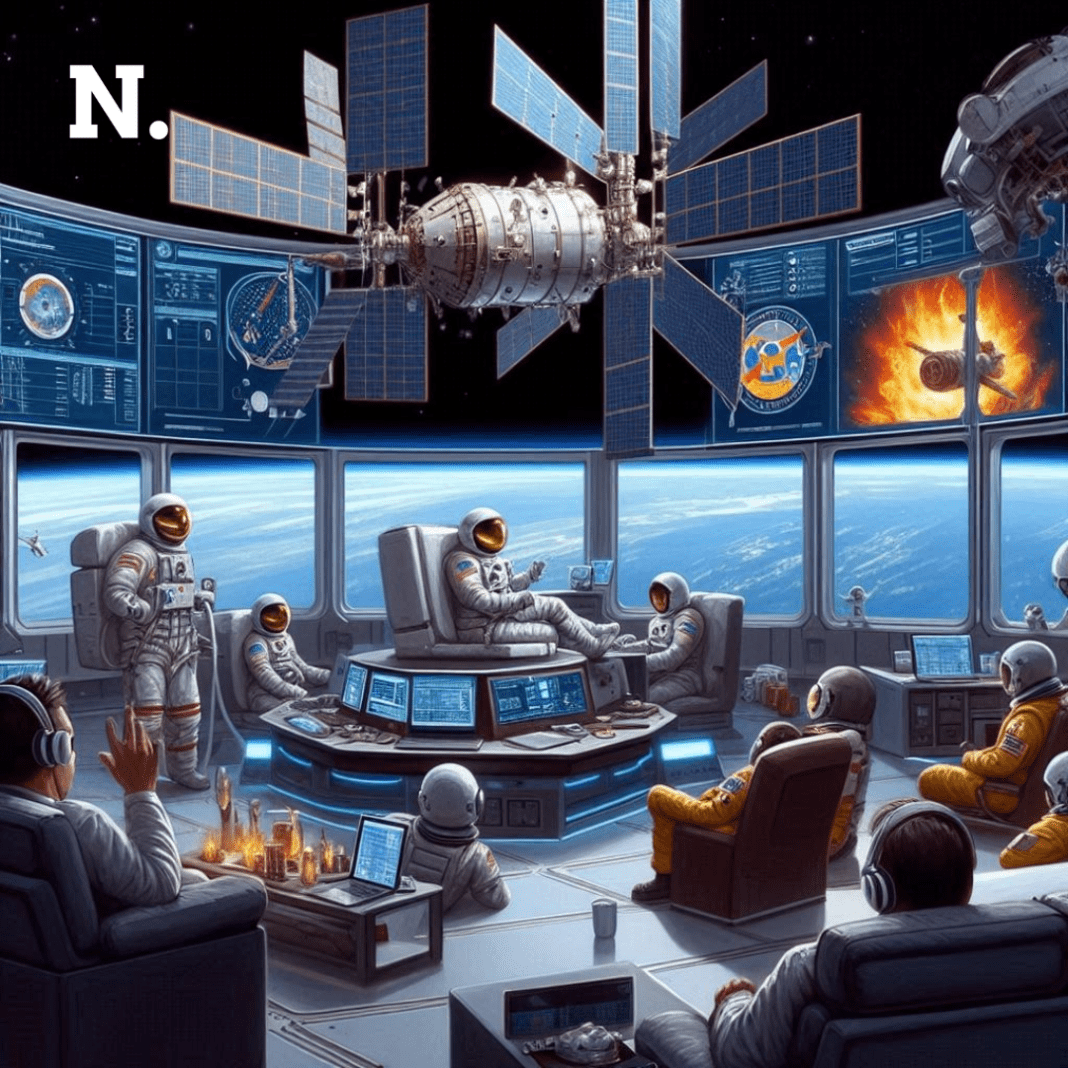

NASA Clarifies No Emergency on ISS

NASA inadvertently sparked concerns of an emergency on the International Space Station (ISS) when a simulation audio broadcast led to speculation about astronauts experiencing decompression sickness (DCS). The incident occurred on Wednesday and quickly spread across social media, prompting NASA and SpaceX to issue clarifications.

The Incident At NASA

An audio feed from NASA’s live YouTube channel at around 5:28 p.m. revealed that a crew member on the International Space Station could be exhibiting signs of decompression sickness. This prompted immediate concern among space enthusiasts and observers, who began sharing the audio link on X (formerly Twitter), warning of a potential serious emergency on the ISS.

Initial Reactions

As the audio circulated, many social media users speculated about the severity of the situation. The sudden influx of posts raised alarms and led to widespread confusion. The audio’s content, indicating a medical scenario involving decompression sickness, seemed to confirm the fears of an ongoing emergency.

Clarification by NASA

NASA’s official ISS account on X promptly released a message to allay the rising apprehension. They gave the public the assurance that the ISS was not experiencing an emergency. The account explained that the audio was mistakenly broadcast from an ongoing simulation exercise, which is part of regular training for crew members and ground teams to prepare for various scenarios in space.

Simulation Details

The simulation in question involved astronauts receiving treatment for decompression sickness, a condition known as “the bends.” This condition occurs when dissolved gases in the body form bubbles due to rapid pressure changes, such as those experienced during fast ascents in diving. Symptoms of DCS include joint pain, dizziness, and breathing issues, and it can be potentially fatal if not treated promptly.

Reassurances from NASA and SpaceX

NASA stressed that all of the crew members were safe and well and were simply sleeping at the time of the audio broadcast. They confirmed that the planned spacewalk for the next day would proceed as scheduled at 8 a.m. This statement aimed to reassure the public and dispel any lingering fears about the crew’s safety.

SpaceX also took to X to provide additional reassurance. They clarified that the simulation was merely a test and that the crew training in Hawthorne was safe and healthy, as was the Dragon spacecraft docked to the ISS. This coordinated effort between NASA and SpaceX was crucial in quelling the unfounded concerns that had arisen.

Understanding Decompression Sickness

Decompression sickness, or DCS, is a significant concern in various high-pressure environments, including space travel. It occurs when nitrogen bubbles form in the bloodstream and tissues due to rapid pressure changes. This condition is commonly associated with divers who ascend too quickly, but it can also affect astronauts during extravehicular activities (spacewalks) if proper precautions are not taken.

The symptoms of DCS can range from mild to severe and include joint pain, dizziness, headaches, and difficulty breathing. In extreme cases, it can lead to paralysis or death. Therefore, it is essential for astronauts to undergo rigorous training to recognize and respond to such medical emergencies effectively.

The Importance of Simulations

The incident underscores the importance of continuous training and simulations for astronauts and ground control teams. These exercises are designed to prepare them for a wide range of potential emergencies, ensuring they can respond swiftly and effectively in real-life situations. By conducting such simulations, space agencies like NASA can enhance the safety and preparedness of their crews.

Public Perception and Communication

The accidental broadcast of the simulation audio highlights the challenges of public communication in the digital age. With the proliferation of social media, information can spread rapidly, often without context or verification. This incident serves as a reminder of the need for clear and timely communication from authoritative sources to prevent misinformation and panic.

Conclusion

The recent confusion over the simulation audio broadcast by NASA underscores the critical role of simulations in space missions. It also highlights the importance of effective communication. NASA and SpaceX’s prompt clarifications helped to reassure the public. They ensured that the focus remains on the safety and well-being of the ISS crew. As space exploration advances, lessons from such incidents will be invaluable. These lessons are crucial in maintaining transparency and trust with the public.

Aahana M Joshi
Aahana M Joshi
Aahana Joshi is the youngest contributor at News Interpretation, bringing a fresh perspective to the platform. Her writing spans a wide range of topics, with a particular focus on Science and Space Technology. Aahana's insightful articles make complex subjects accessible and engaging for readers, showcasing her talent and passion for Space Technology.

TOP 10 TRENDING ON NEWSINTERPRETATION

Cyber Attacks on Space Infrastructure: Satellites, GPS and the Ground Systems Behind Them

From the Viasat KA-SAT hack to GPS jamming over the Baltic, a research guide to how attackers target satellites, navigation signals and ground stations, and why it matters on Earth.

How AI Agents Are Used in Cyber Attacks: From Assisted Hacking to AI-Orchestrated Espionage

Attackers now use AI agents to scan networks, write exploits and run extortion campaigns. A research guide to documented cases, including the first reported AI-orchestrated espionage campaign, and what defenders should do.

Cyber Attacks on AI and LLMs: How Attackers Target Large Language Models

Prompt injection, data poisoning, model theft and jailbreaks: a research guide to how attackers target AI systems and large language models, with real cases and defences.

French Supermarket Refrigeration Cyberattack: How Hacking the Cold Chain Can Endanger Lives

In October 2026 attackers heated refrigeration cabinets in hundreds of French supermarkets to as much as 50°C. No one was hurt, but the attack shows how hacking the cold chain can endanger lives through fire, food poisoning and spoiled medicines.

Cyberattacks on Nuclear Facilities: Stuxnet, Kudankulam and the Limits of Air Gaps

Stuxnet, the Davis-Besse worm and malware at India’s Kudankulam plant: what they show about cyber risk at nuclear facilities and the limits of air gaps.

Triton: When Hackers Target the Safety Systems That Prevent Industrial Disasters

The 2017 Triton attack targeted the safety systems that prevent industrial disasters. What happened, who was charged, and how plants protect their last line of defence.

Cybersecurity Risks in Smart Cities: When Connected Infrastructure Fails

How connecting traffic control, emergency alerts and utilities concentrates cyber risk in cities, what the Dallas and Atlanta incidents showed, and what governments recommend.

Weaponized Drones: Hijacking, GPS Spoofing and Emerging Cyber Warfare Risks

How drones can be hijacked, jammed or misled by GPS spoofing, what researchers have demonstrated, and why governments treat drone fleets as a security risk.

Ransomware Attacks on Hospitals: How Healthcare Cyberattacks Put Patients at Risk

How ransomware against hospitals and their suppliers delays care and endangers patients, what the Düsseldorf and WannaCry cases show, and what research says about deaths.

Operational blunder exposes massive Russian cyber espionage attack on Ukrainian prosecutors

A major cyberattack has compromised the email accounts of...

Cyber Attacks on Space Infrastructure: Satellites, GPS and the Ground Systems Behind Them

From the Viasat KA-SAT hack to GPS jamming over the Baltic, a research guide to how attackers target satellites, navigation signals and ground stations, and why it matters on Earth.

French Supermarket Refrigeration Cyberattack: How Hacking the Cold Chain Can Endanger Lives

In October 2026 attackers heated refrigeration cabinets in hundreds of French supermarkets to as much as 50°C. No one was hurt, but the attack shows how hacking the cold chain can endanger lives through fire, food poisoning and spoiled medicines.

Cyberattacks on Nuclear Facilities: Stuxnet, Kudankulam and the Limits of Air Gaps

Stuxnet, the Davis-Besse worm and malware at India’s Kudankulam plant: what they show about cyber risk at nuclear facilities and the limits of air gaps.

Triton: When Hackers Target the Safety Systems That Prevent Industrial Disasters

The 2017 Triton attack targeted the safety systems that prevent industrial disasters. What happened, who was charged, and how plants protect their last line of defence.

Cybersecurity Risks in Smart Cities: When Connected Infrastructure Fails

How connecting traffic control, emergency alerts and utilities concentrates cyber risk in cities, what the Dallas and Atlanta incidents showed, and what governments recommend.

Ransomware Attacks on Hospitals: How Healthcare Cyberattacks Put Patients at Risk

How ransomware against hospitals and their suppliers delays care and endangers patients, what the Düsseldorf and WannaCry cases show, and what research says about deaths.

FBI warns of AVrecon malware targeting outdated routers linked to proxy based cybercrime

A serious cybersecurity warning has been issued regarding commonly...

Related Articles

Popular Categories
