

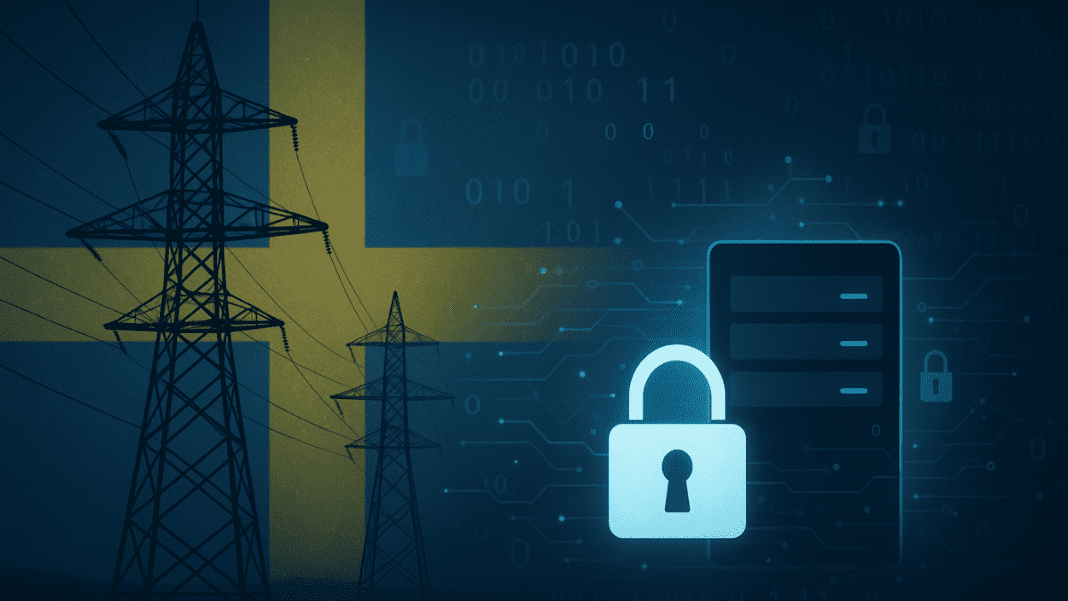
Ransomware attack hits Svenska kraftnät; 280 GB of data reportedly stolen

Sweden’s national electricity grid operator, Svenska kraftnät, has confirmed that it suffered a cyberattack involving ransomware and a data breach. The agency, which manages the country’s high-voltage power network, revealed that hackers broke into its internal systems and stole about 280 gigabytes of internal data.

In a brief statement on its website, Svenska kraftnät said it is investigating “to find out what information has leaked and how it might affect us.” The organization emphasized that the electricity supply and grid operations remain unaffected, and all mission-critical systems are functioning normally.

Cem Göcgören, Head of Information Security at Svenska kraftnät, explained that the team has found no signs the power system itself was impacted. He added that the investigation will continue until the agency fully understands what information was accessed and whether any sensitive details were exposed.

The breach has raised concerns because Svenska kraftnät is responsible for operating and maintaining Sweden’s entire national transmission system — a vital infrastructure that supports homes, industries, and public services across the country.

NSE hit by 40 crore cyberattacks during ‘Operation Sindoor’ simulation, systems stay secure

Ransomware Group Everest Claims Responsibility

A ransomware group calling itself Everest has claimed responsibility for the attack on Svenska kraftnät. The group announced its involvement on the dark web, saying it had stolen around 280 GB of files. Although the hackers did not share details about the stolen data, they claimed to have confidential internal information and are now demanding money to prevent its release.

Cybersecurity experts describe Everest as a Russian-speaking ransomware organization, but not one linked to any state or government. The group has been active for several years and has carried out attacks on various companies and institutions worldwide. However, it is not considered a highly sophisticated or dangerous collective.

In fact, Everest became somewhat infamous after a 2024 incident involving a small data breach at Mailchimp, which many cybersecurity professionals mocked for being insignificant. That episode damaged the group’s reputation, leading some experts to label it as an unskilled or opportunistic outfit rather than a major cyber threat.

Despite this, Everest’s latest claim has drawn attention because targeting a national grid operator — even without affecting its operations — highlights how ransomware groups continue to pressure governments and critical infrastructure providers to pay ransoms. Authorities are analyzing how the attackers gained access to Svenska kraftnät’s systems and which parts of the network were compromised.

Investigation Ongoing but Power System Safe

Svenska kraftnät confirmed that its cybersecurity specialists and engineers are working around the clock to determine the full extent of the attack. The investigation is focusing on identifying what data was taken and whether any of it could affect the agency’s operations, employees, or partners.

Spain–Portugal metro disruption shows challenges in managing cyber and operational safety

Cem Göcgören stated that, at this stage, no operational systems controlling the flow of electricity were affected. These critical systems are kept separate from administrative networks, which appear to have been the target of the breach.

The agency has not disclosed the ransom amount or whether it plans to pay the attackers. In line with international practice, paying ransom demands is generally discouraged, as it fuels more attacks and offers no guarantee that the stolen data will be deleted.

Experts believe that, even though the hackers did not disrupt electricity supply, such breaches can still have serious consequences. Internal documents, communications, or employee data might have been exposed, which could create secondary risks or privacy concerns.

Svenska kraftnät said it continues to cooperate with Swedish authorities and cybersecurity professionals to strengthen its systems and trace how the attack occurred. The agency reassured the public that electricity delivery remains stable, and there are no threats to Sweden’s national power grid operations at this time.

The situation remains under careful observation as investigators work to assess the data breach and protect the integrity of Sweden’s critical energy infrastructure.
T U Deshmukh
T U Deshmukh
T U Deshmukh is the leading voice on the subject of Jobs, AI, Data and layoffs and she regularly contributes a column on Jobs for Newsinterpretation.

TOP 10 TRENDING ON NEWSINTERPRETATION

Cyber Attacks on Space Infrastructure: Satellites, GPS and the Ground Systems Behind Them

From the Viasat KA-SAT hack to GPS jamming over the Baltic, a research guide to how attackers target satellites, navigation signals and ground stations, and why it matters on Earth.

How AI Agents Are Used in Cyber Attacks: From Assisted Hacking to AI-Orchestrated Espionage

Attackers now use AI agents to scan networks, write exploits and run extortion campaigns. A research guide to documented cases, including the first reported AI-orchestrated espionage campaign, and what defenders should do.

Cyber Attacks on AI and LLMs: How Attackers Target Large Language Models

Prompt injection, data poisoning, model theft and jailbreaks: a research guide to how attackers target AI systems and large language models, with real cases and defences.

French Supermarket Refrigeration Cyberattack: How Hacking the Cold Chain Can Endanger Lives

In October 2026 attackers heated refrigeration cabinets in hundreds of French supermarkets to as much as 50°C. No one was hurt, but the attack shows how hacking the cold chain can endanger lives through fire, food poisoning and spoiled medicines.

Cyberattacks on Nuclear Facilities: Stuxnet, Kudankulam and the Limits of Air Gaps

Stuxnet, the Davis-Besse worm and malware at India’s Kudankulam plant: what they show about cyber risk at nuclear facilities and the limits of air gaps.

Triton: When Hackers Target the Safety Systems That Prevent Industrial Disasters

The 2017 Triton attack targeted the safety systems that prevent industrial disasters. What happened, who was charged, and how plants protect their last line of defence.

Cybersecurity Risks in Smart Cities: When Connected Infrastructure Fails

How connecting traffic control, emergency alerts and utilities concentrates cyber risk in cities, what the Dallas and Atlanta incidents showed, and what governments recommend.

Weaponized Drones: Hijacking, GPS Spoofing and Emerging Cyber Warfare Risks

How drones can be hijacked, jammed or misled by GPS spoofing, what researchers have demonstrated, and why governments treat drone fleets as a security risk.

Ransomware Attacks on Hospitals: How Healthcare Cyberattacks Put Patients at Risk

How ransomware against hospitals and their suppliers delays care and endangers patients, what the Düsseldorf and WannaCry cases show, and what research says about deaths.

Operational blunder exposes massive Russian cyber espionage attack on Ukrainian prosecutors

A major cyberattack has compromised the email accounts of...

Cyber Attacks on Space Infrastructure: Satellites, GPS and the Ground Systems Behind Them

From the Viasat KA-SAT hack to GPS jamming over the Baltic, a research guide to how attackers target satellites, navigation signals and ground stations, and why it matters on Earth.

French Supermarket Refrigeration Cyberattack: How Hacking the Cold Chain Can Endanger Lives

In October 2026 attackers heated refrigeration cabinets in hundreds of French supermarkets to as much as 50°C. No one was hurt, but the attack shows how hacking the cold chain can endanger lives through fire, food poisoning and spoiled medicines.

Cyberattacks on Nuclear Facilities: Stuxnet, Kudankulam and the Limits of Air Gaps

Stuxnet, the Davis-Besse worm and malware at India’s Kudankulam plant: what they show about cyber risk at nuclear facilities and the limits of air gaps.

Triton: When Hackers Target the Safety Systems That Prevent Industrial Disasters

The 2017 Triton attack targeted the safety systems that prevent industrial disasters. What happened, who was charged, and how plants protect their last line of defence.

Cybersecurity Risks in Smart Cities: When Connected Infrastructure Fails

How connecting traffic control, emergency alerts and utilities concentrates cyber risk in cities, what the Dallas and Atlanta incidents showed, and what governments recommend.

Ransomware Attacks on Hospitals: How Healthcare Cyberattacks Put Patients at Risk

How ransomware against hospitals and their suppliers delays care and endangers patients, what the Düsseldorf and WannaCry cases show, and what research says about deaths.

FBI warns of AVrecon malware targeting outdated routers linked to proxy based cybercrime

A serious cybersecurity warning has been issued regarding commonly...

Related Articles

Popular Categories
