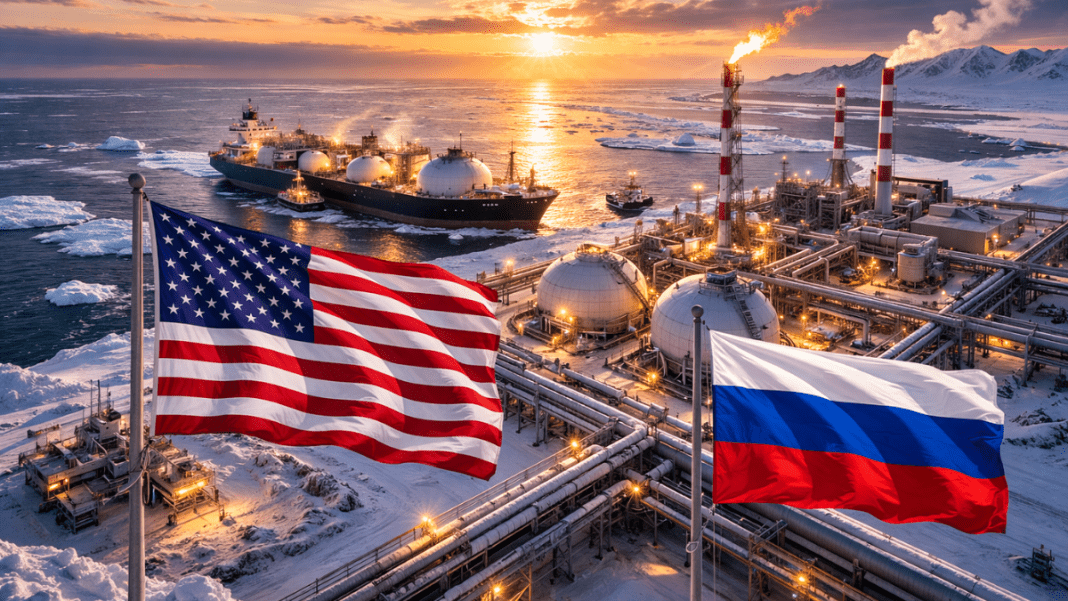

A report by The New York Times has highlighted a new energy agreement involving an American investor connected to the Trump family and Russia’s largest private gas company, Novatek. The development has gained global attention because it comes at a time when political tensions and sanctions continue to shape international business decisions.
The deal focuses on liquefied natural gas projects linked to Arctic and Alaskan energy development. It emerged after high-level interactions between leaders of the United States and Russia, drawing interest from policymakers, energy analysts, and companies watching for signs of renewed economic engagement.
High-Level Talks Spark Energy Cooperation
According to the report, Dallas-based investor Gentry Beach signed an agreement with Novatek after discussions that followed a meeting between Donald Trump and Vladimir Putin in Alaska. Beach said the project had been discussed “at the highest levels” in both Washington and Moscow, suggesting the idea had been part of broader conversations about energy cooperation.
Secret intelligence files on Trump? Ex-spy claims Russia and Kazakhstan hold explosive materials
After meeting Trump in Anchorage, Putin publicly mentioned that Novatek was in talks with U.S. partners regarding possible liquefied natural gas production projects in the Arctic and Alaska. These comments brought attention to potential cross-border energy partnerships at a time when many Western companies remain cautious about operating in Russia.
Liquefied natural gas, often called LNG, is natural gas cooled into a liquid so it can be transported by ship across long distances. Arctic LNG projects are considered important because they can expand supply routes and help countries secure energy from remote regions.
Novatek confirmed that it was negotiating the possible use of its liquefaction technology for a project on Alaska’s North Slope. The company did not publicly name Beach as its partner but said any agreement would need approval from both Russian and U.S. authorities.
Political Links and Business Separation
Beach is known to have longstanding personal connections to Donald Trump Jr., including being a college friend and serving as a finance vice chairman for Trump’s 2017 inauguration committee. Despite these ties, Beach said his business effort was separate from diplomatic talks between Washington and Moscow and that his relationship with Trump Jr. played no role in the agreement.
The investor said negotiations took place during meetings in Dubai and across Europe with Novatek’s chief executive, Leonid Mikhelson. Mikhelson is under sanctions from Britain and Canada but is not sanctioned by the United States or the European Union, which adds complexity to international business dealings involving the company.
Secret intelligence files on Trump? Ex-spy claims Russia and Kazakhstan hold explosive materials
Beach did not reveal financial details of the deal but indicated that leadership for the project would be announced later. The lack of disclosed figures is common in early-stage energy agreements, especially those requiring regulatory approvals involving Novatek.
The discussions highlight how private investors sometimes explore opportunities even when governments maintain cautious political positions. Business activity can move forward within specific legal frameworks created by sanctions policies surrounding companies like Novatek.
Sanctions, Risks, and Arctic LNG Importance
Novatek operates under partial U.S. sanctions, while some of its subsidiaries face stricter limits. Beach said the structure of these measures allowed him to pursue the agreement legally. This reflects how sanctions can restrict certain activities while leaving room for specific partnerships.
Energy projects in Arctic regions are technically challenging and expensive. They require advanced engineering, international financing, and government support. Because of this, any collaboration between American investors and Russian energy companies attracts strong global interest.
UK weighs new sanctions on Russia after European report links Alexei Navalny’s
death to poisoning
The Alaska North Slope is seen as a key energy area because of its natural gas reserves and its proximity to Arctic shipping routes. Using liquefaction technology could allow gas from remote tundra regions to reach global markets, particularly in Asia, where LNG demand remains high.
Russian officials have promoted the idea of improving economic ties with Washington, while U.S. officials have said broader cooperation would depend on progress in peace negotiations related to the conflict in Ukraine. This backdrop has made the Novatek agreement notable within the energy sector.
The New York Times report emphasized that the deal reflects ongoing discussions about technology sharing and potential project structures rather than a finalized large-scale partnership. Governments, energy companies, and markets continue to monitor such developments as international energy cooperation evolves under political constraints.