

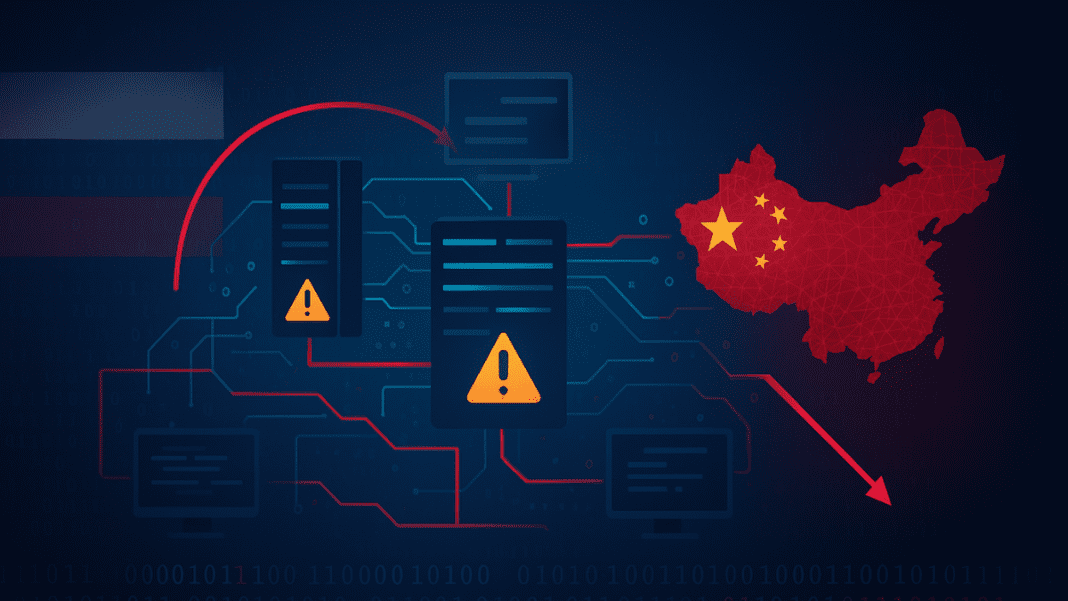
Symantec Confirms Chinese Hackers Breached Russian IT Firm — Hidden for 5 Months

In a surprising and unusual move, a Russian IT service provider has been hacked by a Chinese state-sponsored cyber group, showing that even countries often seen as allies are not safe from cyberattacks. Security researchers at Symantec reported that the attack was carefully planned and executed, allowing the hackers to stay undetected while collecting sensitive data over several months.

Chinese Hackers Infiltrate Russian IT Company

The attack was carried out by Jewelbug, a Chinese government-linked hacking group. Cybersecurity experts classify Jewelbug as an Advanced Persistent Threat (APT), meaning they work quietly and carefully to stay inside computer systems for long periods to steal sensitive information. While the group has previously targeted regions such as South America, South Asia, and Taiwan, the breach of a Russian company surprised many cybersecurity experts.

According to Symantec, the hackers infiltrated the network of the Russian IT service provider in early 2025 and remained inside for at least five months. During this time, they accessed software code repositories and build systems, which are essential for creating software for the company’s clients. This access gave the attackers the potential to launch supply chain attacks, affecting not just the company itself but also the organizations it serves.

4 airports in US and Canada hit by hackers targeting PA systems and flight information

The long dwell time in the network demonstrates the stealth and persistence of state-sponsored hacking operations. Jewelbug’s activities showed careful planning and execution, typical of advanced persistent threats (APTs) sponsored by governments.

Sophisticated Tools and Techniques

Researchers found that the hackers used a Microsoft tool called CDB (Console Debugger), renaming it as 7zup.exe to hide their activity. CDB is normally a legitimate program used by developers to find and fix problems in software, but the hackers misused it to secretly control computers and bypass security protections. This tool allowed the attackers to perform a wide range of operations while avoiding detection.

With the renamed debugger, the attackers were able to:

Spain–Portugal metro disruption shows challenges in managing cyber and operational safety

  • Run hidden programs and shellcode on company systems
  • Bypass security measures and application whitelisting
  • Dump credentials and steal usernames and passwords
  • Maintain persistent access and elevate privileges using scheduled tasks
  • Run and terminate other programs, including security solutions

The hackers also attempted to cover their tracks by clearing Windows Event Logs, which usually record system changes and activities. They then used Yandex Cloud, a popular Russian cloud service, to quietly exfiltrate stolen data. Choosing a local cloud service likely helped the attackers avoid raising alarms, as such traffic appeared normal within the company network.

Symantec noted that using trusted tools like Microsoft’s debugger and local cloud services shows how sophisticated and careful the attackers were. Their approach allowed them to stay hidden for months while gathering valuable information.

NSE hit by 40 crore cyberattacks during ‘Operation Sindoor’ simulation, systems stay secure

Targeting Russia Despite Perceived Alliances

The attack is especially notable because Russia and China are often seen as political allies. Many experts assumed Chinese hackers would avoid Russian targets and focus on other countries, but this incident proves otherwise.

Symantec emphasized that Russia is not off-limits to Chinese state-sponsored groups. The Jewelbug hackers have been active globally, and their decision to target a Russian IT provider highlights that cyber operations do not always follow political alliances. The group appears to prioritize strategic and technical advantage over perceived friendship between nations.

This breach underlines the growing complexity of cyber operations. Even organizations in allied countries can become targets for sophisticated hacking groups. The Russian IT company’s experience illustrates the advanced capabilities of state-sponsored hackers and the risks posed to critical technology infrastructure.


Renuka Bangale
Renuka Bangale
Renuka is a distinguished Chartered Accountant and a Certified Digital Threats Analyst from Riskpro, renowned for her expertise in cybersecurity. With a deep understanding of cybercrimes, malware, cyber warfare, and espionage, she has established herself as an authority in the field. Renuka combines her financial acumen with advanced knowledge of digital threats to provide unparalleled insights into the evolving landscape of information security. Her analytical prowess enables her to dissect complex cyber incidents, offering clarity on risks and mitigation strategies. As a key contributor to Newsinterpretation’s information security category, Renuka delivers authoritative articles that educate and inform readers about emerging threats and best practices.

TOP 10 TRENDING ON NEWSINTERPRETATION

Cyber Attacks on Space Infrastructure: Satellites, GPS and the Ground Systems Behind Them

From the Viasat KA-SAT hack to GPS jamming over the Baltic, a research guide to how attackers target satellites, navigation signals and ground stations, and why it matters on Earth.

How AI Agents Are Used in Cyber Attacks: From Assisted Hacking to AI-Orchestrated Espionage

Attackers now use AI agents to scan networks, write exploits and run extortion campaigns. A research guide to documented cases, including the first reported AI-orchestrated espionage campaign, and what defenders should do.

Cyber Attacks on AI and LLMs: How Attackers Target Large Language Models

Prompt injection, data poisoning, model theft and jailbreaks: a research guide to how attackers target AI systems and large language models, with real cases and defences.

French Supermarket Refrigeration Cyberattack: How Hacking the Cold Chain Can Endanger Lives

In October 2026 attackers heated refrigeration cabinets in hundreds of French supermarkets to as much as 50°C. No one was hurt, but the attack shows how hacking the cold chain can endanger lives through fire, food poisoning and spoiled medicines.

Cyberattacks on Nuclear Facilities: Stuxnet, Kudankulam and the Limits of Air Gaps

Stuxnet, the Davis-Besse worm and malware at India’s Kudankulam plant: what they show about cyber risk at nuclear facilities and the limits of air gaps.

Triton: When Hackers Target the Safety Systems That Prevent Industrial Disasters

The 2017 Triton attack targeted the safety systems that prevent industrial disasters. What happened, who was charged, and how plants protect their last line of defence.

Cybersecurity Risks in Smart Cities: When Connected Infrastructure Fails

How connecting traffic control, emergency alerts and utilities concentrates cyber risk in cities, what the Dallas and Atlanta incidents showed, and what governments recommend.

Weaponized Drones: Hijacking, GPS Spoofing and Emerging Cyber Warfare Risks

How drones can be hijacked, jammed or misled by GPS spoofing, what researchers have demonstrated, and why governments treat drone fleets as a security risk.

Ransomware Attacks on Hospitals: How Healthcare Cyberattacks Put Patients at Risk

How ransomware against hospitals and their suppliers delays care and endangers patients, what the Düsseldorf and WannaCry cases show, and what research says about deaths.

Operational blunder exposes massive Russian cyber espionage attack on Ukrainian prosecutors

A major cyberattack has compromised the email accounts of...

Cyber Attacks on Space Infrastructure: Satellites, GPS and the Ground Systems Behind Them

From the Viasat KA-SAT hack to GPS jamming over the Baltic, a research guide to how attackers target satellites, navigation signals and ground stations, and why it matters on Earth.

French Supermarket Refrigeration Cyberattack: How Hacking the Cold Chain Can Endanger Lives

In October 2026 attackers heated refrigeration cabinets in hundreds of French supermarkets to as much as 50°C. No one was hurt, but the attack shows how hacking the cold chain can endanger lives through fire, food poisoning and spoiled medicines.

Cyberattacks on Nuclear Facilities: Stuxnet, Kudankulam and the Limits of Air Gaps

Stuxnet, the Davis-Besse worm and malware at India’s Kudankulam plant: what they show about cyber risk at nuclear facilities and the limits of air gaps.

Triton: When Hackers Target the Safety Systems That Prevent Industrial Disasters

The 2017 Triton attack targeted the safety systems that prevent industrial disasters. What happened, who was charged, and how plants protect their last line of defence.

Cybersecurity Risks in Smart Cities: When Connected Infrastructure Fails

How connecting traffic control, emergency alerts and utilities concentrates cyber risk in cities, what the Dallas and Atlanta incidents showed, and what governments recommend.

Ransomware Attacks on Hospitals: How Healthcare Cyberattacks Put Patients at Risk

How ransomware against hospitals and their suppliers delays care and endangers patients, what the Düsseldorf and WannaCry cases show, and what research says about deaths.

FBI warns of AVrecon malware targeting outdated routers linked to proxy based cybercrime

A serious cybersecurity warning has been issued regarding commonly...

Related Articles

Popular Categories
